
The Fear of the Unknown and Why Meeting Strangers Powers So Many Horror Films
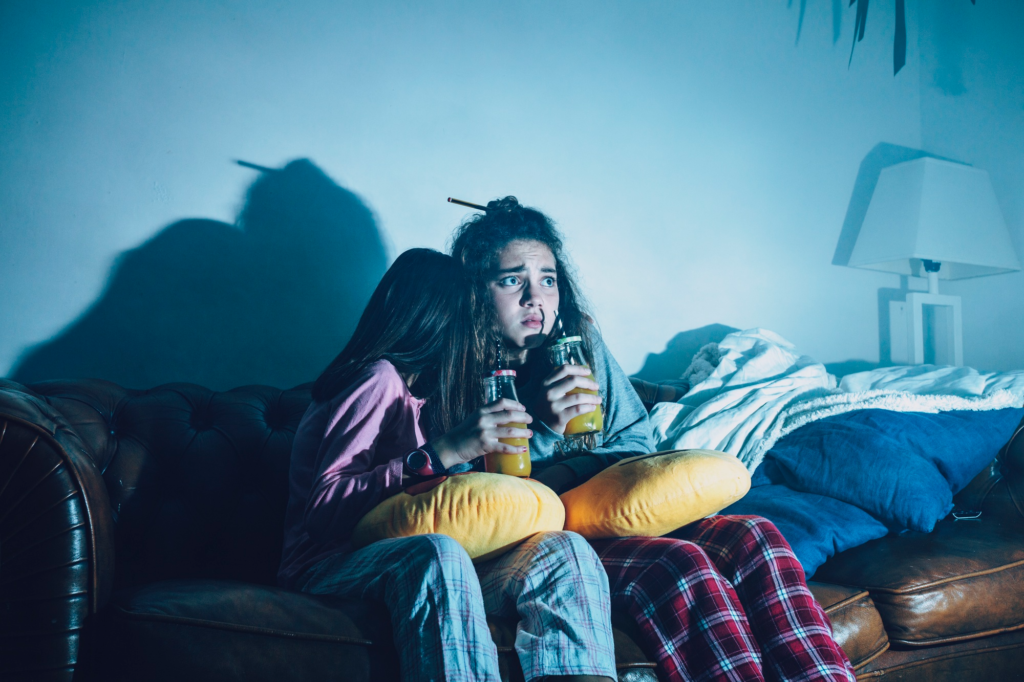
Strangers scare us. Not in every situation, not every day — but at a deep, cellular level, the unfamiliar human face triggers something ancient and relentless. Horror cinema has known this for decades. It doesn’t need monsters. It doesn’t need ghosts. Sometimes, all it takes is a knock at the door from someone you’ve never met.
The psychology of horror movies is built on this foundation more than almost any other element.
Why Strangers Trigger Fear Before They Even Speak
Evolution has built us to be suspicious. Anthropologists suggest that for most of human prehistory, encountering an unknown individual outside your group was a genuine life-or-death situation. That threat response didn’t disappear when we built cities and invented doorbells. It just went underground.
The brain doesn’t wait for context. It reacts first, rationalizes second. Horror directors exploit exactly this window. While it’s unlikely many people are turned off by chatting with girls on camera, most actually want it. The rise in popularity of Callmechat confirms this. Anonymity and digital dialogue remove a lot of formalities and complications, but some fears of strangers may still remain.
The Cinematic Stranger as the Perfect Villain
What makes the stranger-danger archetype so durable in film? It’s not just fear — it’s the absence of information. You can’t predict what someone will do if you know nothing about them. That uncertainty is where suspense lives. Think of the psychological thriller structure: the audience and the protagonist are equally blind, equally exposed.
Films like Funny Games, Strangers, and Get Out don’t rely on supernatural explanations. They use ordinary people showing up in ordinary places — and that’s precisely why they work. The horror isn’t imported from another dimension. It walks up your driveway.
Surveillance and Isolation Themes: Watching and Being Watched
Modern horror has absorbed a specific anxiety from everyday digital life. Surveillance and isolation themes now run through entire subgenres — found footage, home invasion, stalker narratives — each one amplifying the feeling that privacy no longer exists.
Statistics tell part of the story here. According to a 2023 Pew Research survey, 81% of Americans feel they have little to no control over data collected about them by companies or governments. Horror filmmakers have translated this diffuse, modern dread into visual language: flickering security cameras, glitching phone screens, messages sent from accounts that shouldn’t be active. Someone is always watching. And you never quite see their face clearly enough.
Vulnerability in Digital Meetups and the Rise of Techno-Horror
Here’s where the genre gets genuinely new territory. Vulnerability in digital meetups — meeting someone from a dating app, accepting a stranger’s video call, clicking a link from an unknown sender — has become a freshly productive vein of cinematic fear.
Films like Unfriended, Host, and Ratter moved the action entirely into screens and interfaces. The stranger isn’t at the window. They’re inside your device. That shift matters psychologically: there’s no physical distance to retreat to, no door to lock. The invasion is invisible and immediate. And audiences respond. Host, filmed entirely on Zoom during 2020’s lockdowns, became one of Shudder’s most-watched films that year — suggesting the format tapped something uncomfortably real.
Dismantling Trust: How Horror Films Mirror Real Social Fracture
One underappreciated function of the cinematic stranger is that it externalizes a social anxiety most people carry quietly. Trust has been eroding measurably. The Edelman Trust Barometer reported in 2023 that global trust in institutions and fellow citizens has declined across virtually every demographic category for the fifth consecutive year.
Horror films don’t cause this distrust. They reflect it back. When a film forces its protagonist to decide whether the helpful neighbor is actually helpful, it’s asking the same question millions of people navigate silently in real life. The genre essentially dramatizes what it feels like to live in a low-trust society — with jump scares added.
The Tropes That Keep Working: A Closer Look at Suspense Horror Mechanics
Analyzing suspense horror tropes reveals a fairly consistent toolkit. The stranger appears in a context that makes refusal or escape socially awkward — a ride share, a hotel elevator, a job interview. Social norms trap the protagonist as much as physical circumstances do. You can’t just run. Running would be rude.
This is deliberate and devastatingly effective. Directors like Jordan Peele and Michael Haneke use politeness as a weapon. The villain isn’t always menacing at first — they’re too friendly, too helpful, slightly off in ways that are hard to articulate. The horror lives in that social friction zone where instinct says danger and manners say stay.
Modern Social Isolation and the Stranger We Already Know
There’s a quietly devastating irony at the heart of modern cinematic stranger danger: the horror is increasingly coming from inside the social network. The psychological thriller narrative has shifted. The threat is no longer always the outsider. Sometimes it’s the coworker. The date. The person you’ve been texting for three weeks.
A 2021 study from the American Psychological Association found that approximately 36% of Americans reported serious loneliness — and that figure climbed steeply among younger adults. Isolation doesn’t just make people lonely. It makes them susceptible. Desperate for connection. Willing to lower their guard. Horror knows this too. The most terrifying stranger in a modern thriller isn’t always a masked intruder. Sometimes it’s someone who seemed safe until they weren’t.
Why We Keep Watching
None of this explains, on its own, why we enjoy it. But that’s the engine underneath the psychology of horror movies — controlled fear. The screen keeps you safe. You can witness the worst-case version of a social encounter from the protection of your seat, process the anxiety, and leave the cinema intact.
Horror about strangers gives us permission to trust our instincts. To acknowledge that wariness is rational, that vulnerability is real, and that the unknown genuinely carries risk. It doesn’t solve the problem of human unpredictability. It just makes that problem feel, for 90 minutes, like something you survived.